
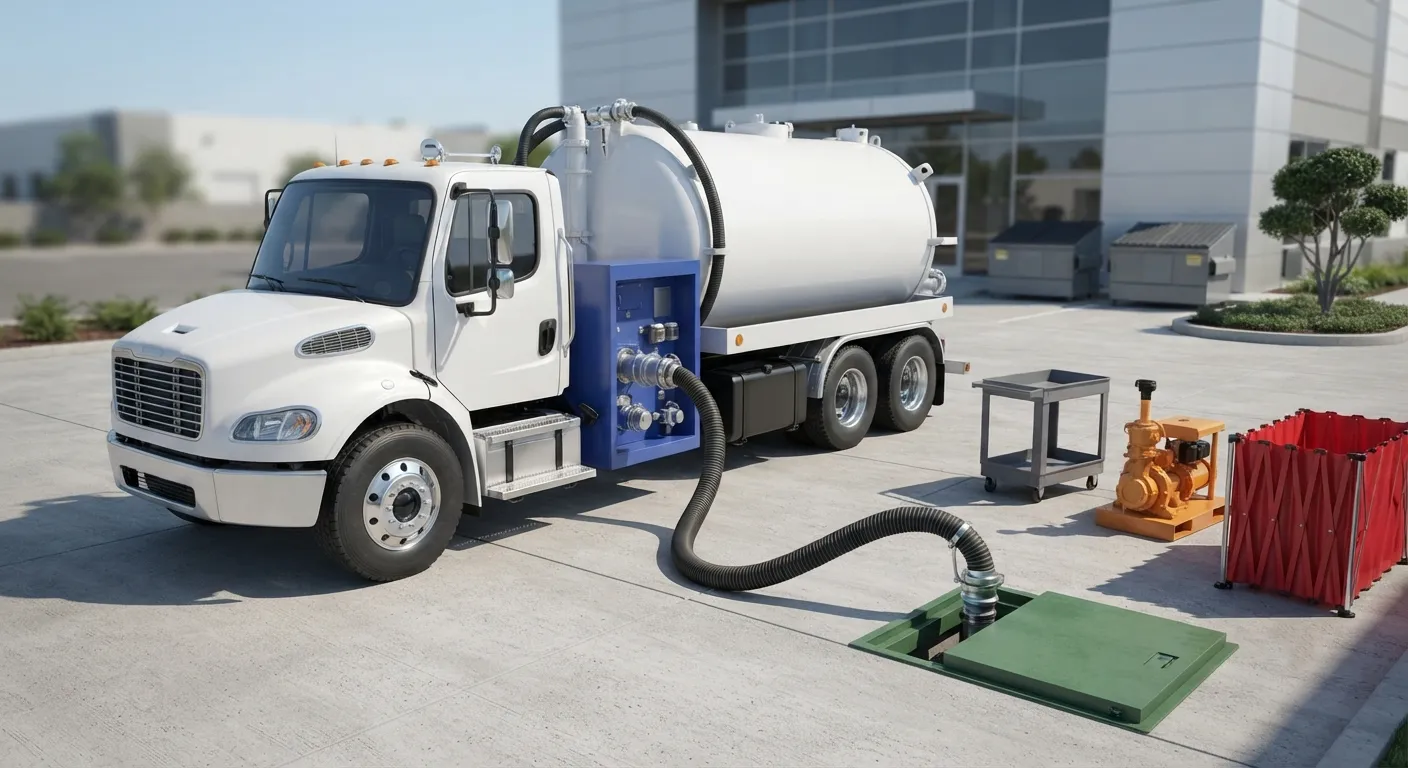
How Often Does a Grease Trap Need Pumping?
It depends on how much your kitchen fries, sautes and washes down the drain daily. A trap fills with fats, oils, grease and food solids over time, and the 25 percent depth mark is the trigger point, not a calendar date. A slow-turn cafe near Finley might stretch to 10 or 12 weeks between visits. A high-volume kitchen in downtown Kennewick could need pumping monthly or more. We measure the layer at every stop and set the next visit based on what we find, not guesswork. If you are unsure where your restaurant falls, our septic pumping service page covers the broader maintenance picture, and septic tank warning signs lists red flags worth knowing even if grease traps are a separate system. Compare that against a typical septic tank pumping cost if you are budgeting for both.
What Does Grease Trap Pumping Cost in Kennewick?
Grease trap pumping cost runs close to septic pumping pricing, since both use vacuum trucks and similar labor. Expect a day-rate service call in the range below, with commercial accounts sometimes negotiating a standing schedule.
| service | duration | low | typical | high |
|---|---|---|---|---|
| septic/grease pump | day | 150 | 250 | 300 |
| service call | weekend | 50 | 100 | 150 |
Weekend and after-hours calls run higher than a scheduled weekday pump, so if your trap can wait two days, book it during the week. Restaurants near West Pasco, 8.5 miles north of Kennewick, and Richland, 11.4 miles northwest, fall inside our regular route, which keeps trip charges down. For a full cost breakdown across septic and grease work, see septic tank pumping cost, and if your property runs on a private system entirely, how often to pump a septic tank explains the residential side, typically every 3 to 5 years for a standard tank.
Do Restaurants Need Emergency Grease Trap Pumping?
Yes, and a backed-up trap does not wait for a convenient time. Emergency grease trap pumping matters most when a trap overflows into the kitchen drain line or backs up during service hours, which shuts down a restaurant fast. We run emergency calls across Kennewick and out to Burbank, 17.9 miles east, and West Richland, 16.3 miles northwest. A trap in crisis usually means grease has climbed well past the 25 percent mark and started pushing solids into the line itself. If your kitchen deals with this more than once a season, it is worth moving to a tighter pumping interval instead of waiting for the next emergency. Commercial grease trap pumping on a fixed schedule costs less over a year than repeat emergency calls, and it keeps health inspectors off your back. For general emergency sanitation needs beyond grease traps, our emergency septic service page covers holding tanks and failed systems, and emergency porta potty rental covers restroom needs if a kitchen shutdown forces you to bring in temporary facilities for staff or customers.
Handwashing near a working kitchen also falls under 29 CFR 1910.141(d)(2), which requires soap and towels or a hand-drying device at wash stations, not sanitizer alone. If a renovation or repair job takes your restroom offline while the trap gets serviced, look at portable restroom rental or a handwashing station rental to keep staff compliant in the meantime. Construction crews working alongside a grease trap replacement can also check construction site services for the rest of what a job site needs, from temporary fencing to roll-off dumpster rental for old equipment and debris removal.
How do I know if my grease trap needs pumping?
Watch for slow drains, a sour smell near the trap, or grease pooling at the surface. These signs usually mean you have already passed the 25 percent depth threshold. Waiting past that point risks a backup during service hours, so schedule a pump as soon as you notice any of these.
What is the difference between grease trap pumping and septic pumping?
Grease traps handle fats, oils and grease from a kitchen drain line, while septic tanks handle household or building wastewater. Both need periodic pumping, but grease traps fill faster in busy kitchens. See grease trap pumping details above or septic tank cleaning for full-tank service.
Can I schedule grease trap pumping on a recurring basis?
Yes, most commercial kitchens set up monthly or bimonthly service instead of calling only when problems start. A standing schedule costs less than repeat emergency visits and keeps your kitchen compliant between inspections.
Does Kennewick Porta Pros serve areas outside Kennewick?
Yes, we cover Finley 7.6 miles east, West Pasco 8.5 miles north, and other nearby towns. Check service areas for the full list, or visit porta potty rental in Kennewick for our main service page.
What happens during a grease trap pumping visit?
A technician measures the fat, oil and grease layer, pumps the tank with a vacuum truck, and checks the baffle and inlet for buildup. Most visits take under an hour for a standard commercial trap, with the next service date set based on what we measure.

Next step
Get a delivery date
Tell us the address, the dates and the headcount. We size the order and confirm the route.